

276 campsite(s) available from € 18.20 Several factors can affect a campsite's ranking. More info


You will love

You will love
- The freedom to walk at your own pace: trails of varying lengths and levels of difficulty mean you can choose the walk that best suits your mood every day.
- Landscapes that unfold with every step: forests, alpine lakes, mountain pastures, waterfalls and panoramic peaks make every route a new discovery.
- Trails accessible from the campsite: many campsites are located near walking trails or provide maps, practical information and guided walks to explore the surrounding area.
- Activities for all levels: from family walks to high-mountain hikes, everyone can enjoy the mountain scenery according to their experience and fitness level.
- Rest and comfort after your hike: at the end of the day, you can relax in your accommodation, make the most of the campsite’s facilities and recharge your batteries in the tranquillity of nature.
Your favourite destinations


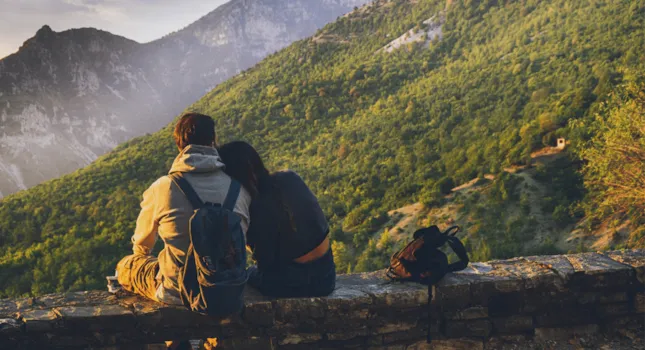
Campsites for Mountain Hiking: A Holiday at Nature’s Pace
In general, campsites in the mountains make an excellent base for exploring the surrounding area. Some establishments are particularly well suited to hiking enthusiasts: they offer suggested routes, provide maps and trail information, or are located close to scenic paths, nature parks and famous mountain trails.
Why Choose a Campsite for a Hiking Holiday?
The main advantage of staying at a campsite is the opportunity to experience nature at close quarters. In the morning, you can set off directly from the campsite or quickly reach a trailhead. In the evening, you return to a peaceful setting surrounded by forests, valleys and mountain peaks.
Camping also gives you considerable freedom when planning your days. Each morning, you can choose the most suitable route depending on the weather, your fitness level and the time available, alternating challenging hikes with leisurely walks and rest days.
A mountain campsite can be the ideal choice for:
- Experienced hikers, looking for panoramic trails, high-altitude routes and multi-day treks.
- Beginners, keen to discover trekking through easy, well-marked walks.
- Families with children, interested in short routes, themed trails and outdoor activities.
- Couples and groups of friends, who want to enjoy an active holiday and discover new landscapes together.
- Seniors, who appreciate the leisurely pace of walking and the opportunity to choose accessible, less demanding routes.
Mountain Campsites and Campsites Suitable for Hiking
Not all mountain campsites offer the same services. Some simply benefit from a privileged location close to forests, lakes, valleys or hiking trails. Others are specifically organised to meet the needs of hikers.
A campsite particularly well suited to trekking may offer:
- Trail maps and route information, including details on distance, elevation gain and difficulty.
- Hiking trails accessible directly from the campsite, allowing you to set off on foot without using your car.
- Guided hikes, organised by the campsite or with local guides.
- Shuttle services, useful for reaching a trailhead or returning after a hike.
- Storage facilities for backpacks and equipment, as well as places to leave hiking boots, poles and bicycles.
- Facilities for drying clothes and footwear, particularly useful after a rainy day.
- Packed lunches or small grocery shops where you can buy water, bread and snacks to take on your hike.
- Up-to-date information on trail conditions, the weather and whether mountain huts and cable cars are open.
The availability of these services varies from one campsite to another. Before booking, it is therefore advisable to read the campsite description carefully and check directly which activities and facilities will be available during your stay.
Accommodation Options for Hikers
A hiking holiday does not necessarily mean sleeping in a tent. Mountain campsites offer different types of accommodation to suit a range of comfort levels and budgets.
- Tent pitches: the traditional option for those seeking a simple experience and wanting to stay close to nature.
- Motorhome and caravan pitches: ideal for exploring several mountain destinations while keeping all your equipment with you.
- Mobile homes and bungalows: offering beds, a kitchen and a private bathroom for extra comfort after a long day on the trails.
- Wooden chalets: particularly well suited to mountain surroundings, providing a cosy atmosphere and accommodating couples, families or groups of friends.
- Lodges and glamping tents: combining the pleasure of sleeping in nature with comfortable furnishings and more upscale facilities.
If you plan to hike every day, having a well-equipped kitchen, an outdoor area and somewhere to store and dry your equipment can make your stay much more convenient.
The Best European Destinations for Camping and Hiking
Europe offers numerous mountain regions where you can combine a campsite stay with hikes of all difficulty levels. Choose from major Alpine ranges, nature parks, valleys and lesser-known regions that are just as appealing.
- The Alps: destinations such as Bourg-d’Oisans, Vallouise, the Vanoise region and Le Grand-Bornand are excellent starting points for exploring valleys, alpine lakes and panoramic trails. There is something for everyone, from gentle walks to high-altitude hikes for more experienced walkers.
- The French and Spanish Pyrenees: areas around Gavarnie, Lourdes, Font-Romeu, Espot and Huesca offer spectacular scenery, including glacial cirques, waterfalls, lakes and nature parks. Routes range from family-friendly walks to challenging hikes for experienced trekkers.
- Austria and Tyrol: Kals am Großglockner, Prutz, Nenzing and other Austrian Alpine destinations are surrounded by green valleys, lakes and high peaks. Many trails are well marked and can be combined with cable cars and local public transport.
- Spain’s mountain ranges: beyond the Pyrenees, the Sierra Nevada and the Alpujarra offer drier, sunnier landscapes, traditional villages and particularly enjoyable trails in spring and autumn. Destinations such as Trevélez and Güéjar Sierra are interesting starting points.
- The Slovenian Alps: the mountain regions of Slovenia are ideal for those seeking forests, rivers, mountain pastures and unspoilt scenery. Campsite stays can combine trekking with cycling, rafting and visits to alpine lakes.
- The Black Forest and Germany’s mountain regions: a particularly pleasant destination for walking through forests, valleys and small villages. Trails are often well maintained and also suit those who prefer moderately challenging hikes.
- The Vosges, Jura and Massif Central: these French regions offer an appealing alternative to higher mountains, with nature trails, lakes and accessible terrain, perfect for families and anyone who prefers walking without tackling steep elevation gains.
Hiking for Everyone: How to Choose Your Route
You do not need to be an experienced hiker to enjoy a walking holiday. Mountain destinations generally offer a wide variety of routes in terms of distance and difficulty.
- Easy walks: short routes with little elevation gain, suitable for families, beginners and anyone who simply wants to enjoy nature.
- Moderately challenging scenic trails: routes lasting a few hours through forests, mountain pastures and around lakes, with various viewpoints along the way.
- High-altitude hikes: longer, more demanding routes for people with good fitness levels and the appropriate equipment.
- Multi-day treks: itineraries divided into stages, with overnight stays at campsites, mountain huts or other accommodation along the way.
- Themed and nature trails: routes focusing on wildlife, flora, geology or local history, which are particularly interesting for families.
Before setting off, check the distance, elevation gain, estimated duration and terrain conditions. Even a route that appears short can become demanding if it includes steep sections, high temperatures or sudden changes in the weather.
What Should You Pack for a Camping and Hiking Holiday?
Good preparation helps you hike safely and cope more effectively with changing weather conditions, which are common in the mountains.
Your backpack should contain:
- Hiking shoes or boots suited to your chosen route.
- Technical clothing that can be worn in layers.
- A waterproof and windproof jacket.
- A hat, sunglasses and sunscreen.
- Water and energy-rich snacks.
- A hiking map or GPS device.
- A small first-aid kit.
- A torch and a portable power bank.
- Hiking poles, if needed.
Always check the weather forecast, stick to marked trails and let someone know your planned route. For challenging or unfamiliar hikes, hiring a local guide can be a particularly useful precaution.
How to Book a Campsite for Mountain Hiking
To find the most suitable campsite, consider not only the beauty of the destination but also its location in relation to hiking trails and key attractions. A campsite surrounded by nature may be perfect for relaxing, but you might need a car to reach the starting points of nearby hikes.
Before booking, check:
- The distance to hiking trails and nature parks.
- Whether trails are accessible directly from the campsite.
- The services available for hikers.
- Whether guided excursions are offered.
- Shuttle services and public transport connections.
- Opening periods for mountain huts and cable cars.
- Nearby shops and places to eat.
- The comfort level of your chosen accommodation.
With Camping Direct, you can compare a wide range of mountain campsites in France, Spain, Italy, Austria, Slovenia and other European destinations. By selecting your dates and preferred facilities, you can find a campsite close to your favourite hiking routes or discover a new region to explore on foot.
Whether you choose an Alpine trail, a hike between lakes and waterfalls, or a simple family walk in the forest, camping gives you the freedom to organise each day at your own pace.
Get your hiking boots ready, choose your next destination and set off to discover Europe’s magnificent mountains!
Frequently Asked Questions About Campsites for Mountain Trekking
How do I choose a campsite suitable for hiking?
Check the distance between the campsite and nearby trails, whether hiking routes are accessible on foot and what facilities are available for hikers. Maps, equipment storage, laundry facilities, shuttle services and information about trail conditions can all make your stay easier.
Do I need to be an experienced hiker?
No. Popular mountain destinations offer easy walks, family-friendly trails and more challenging routes. Before setting off, always check the distance, elevation gain, estimated duration and difficulty level of your chosen route.
Can I go mountain trekking with children?
Yes, provided you choose short, safe routes with limited elevation gain. Themed trails, lakes, waterfalls and picnic areas can make hiking more interesting and enjoyable for the whole family.
What is the best time of year for a camping holiday focused on trekking?
In general, late spring, summer and early autumn offer the most favourable conditions. However, the ideal period depends on the altitude, destination and seasonal opening dates of campsites, mountain huts and cable cars.
What equipment should I bring?
Suitable hiking boots, layered clothing, a waterproof jacket, water, sun protection, a hiking map or GPS device and a small first-aid kit are essential. Hiking poles can also be useful on more demanding routes.
Do campsites organise guided hikes?
Some campsites offer guided excursions or work with local guides. Others provide maps, recommendations and information about nearby trails. It is advisable to check directly with the campsite to find out which services are available before your trip.
What should I do if the weather changes during a hike?
Weather conditions can change quickly in the mountains. Check the forecast before setting off and always carry waterproof clothing. If a thunderstorm, fog or deteriorating conditions arise, stop the hike and return via a safe route.

